
Knowledge is a treasure, but practice is the key to it.
— Thomas Fuller
超速學習
這是我最喜歡的一本學習策略書。環境的巨變,加上 AI 的衝擊,如果不能掌握多種技能,在未來,很可能被邊緣化。而在有限的時間,怎麼高效學習,成為我最想知道的事情。
Ultralearning
This is my favorite book on learning strategies. World changing rapidly and AI transforming the way we work, those who couldn’t learn multiple skills might be left behind. How to learn efficiently with limited time has become the question I am desired to know.
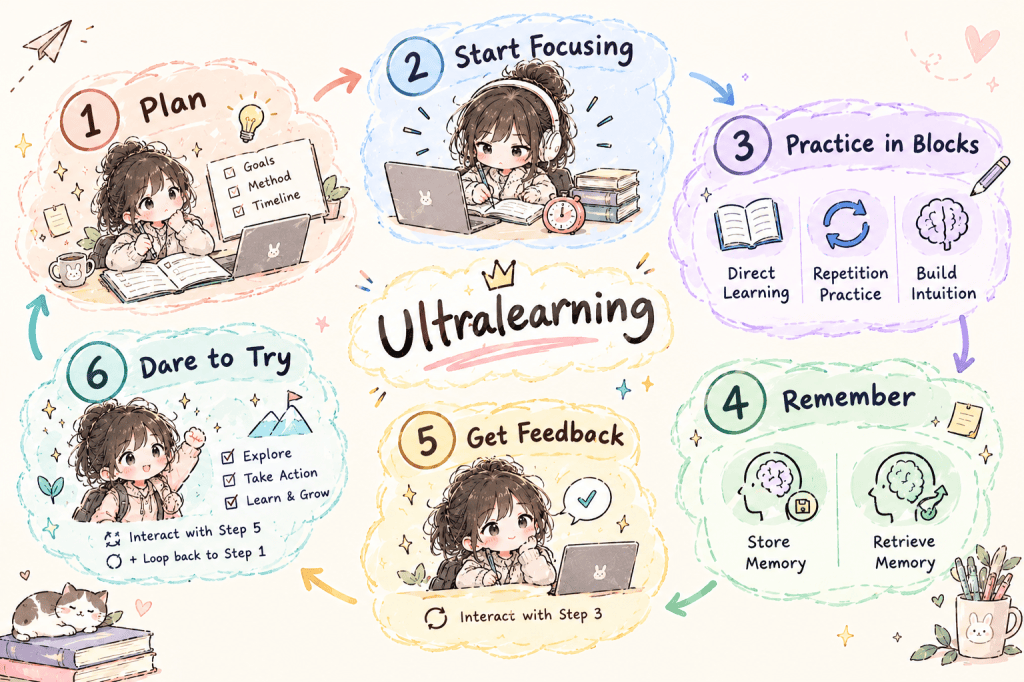
計劃 – 你的地圖
- 為什麼:動機,也是動力 (請教專家或者業內人士)
- 做什麼:你想學習的知識
- 需要了解的事情
- 需要記下來的
- 需要練習的
- 怎麼做:學習資源,在哪裡學,每天怎麼安排
Plan – your map
- Why: your motivation (if you’re really interested in something, ask experts or industry professionals)
- What: the knowledge or skill you want to learn
- What you need to knowo
- What you need to remember
- What you need to practice
- How: Where are resources, when you start to study, how you arrange tasks everyday
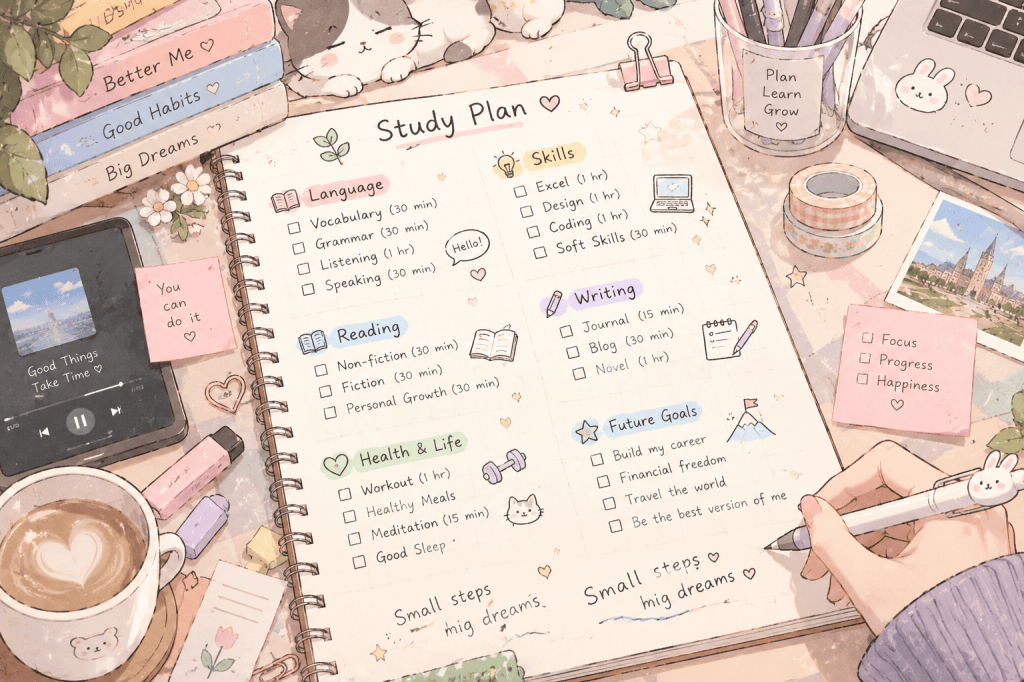
專注
我們都希望每天有個特別的時間。在這個時間內,誰都沒辦法打擾我們。但事實是,你通常會被各種事情,或者誘惑圍繞。
- 問題一:不知道怎麼開始? 俗稱,拖延症。 五分鐘方法,承認自己不想做,然後先嘗試五分鐘。
- 問題二:分心。 可以參考另一個文章 深度工作力
Concentration
We all wish we had a special period each day when no one could interrupt us. But the fact is that we’re usually surrounded by distractions, obligations, and temptations.
- Question #1 Don’t know how to start, as we know, procrastination. 5 minutes rule, admit you don’t want to do it, then just give it a try for 5 minutes.
- Questions #2 Distraction. You can reference to Deep Work
練習
知道自己的目標,也有方法讓自己專注於學習後,就可以開始旅程了。
- 直接學習:直接做你想變擅長的事。以計劃為主的學習,而非課程。有明確目標,並依著目標學習,比課程式學習,更有效果。
- 反復練習最弱的地方
- 培養直覺:大量經驗後,腦中形成的資料庫
Practice
Once you know your goal and figure out a way to stay focused, you can begin your journal.
- Direct learning: Do the thing you want to become good at. Focus on goal-driven learning rather than courses. Learning with a clear object is more effective than simply following a structure curriculum.
- Repetition practice: Repeatedly practice the parts you struggling the most
- Develop your intuition: Through intensely practicing, you will gain some experience. Those experience will start building an internal database in your brain that makes you faster and more accurate judgment when you face similar situation in the future.

記住
學習的過程中,重要的除了理解知識以外,還要記得住。若無法記住,則知識將難以累積。
- 提取記憶:強迫自己反覆回想,最常用的方法是利用測驗。
- 保留記憶
- 間隔法:間隔一段時間,重複回想。適用於不複雜的知識。
- 過度學習:在一段時間內,大量且頻繁的練習。
- 記憶法:利用圖來記住訊息。需要前期大量的練習,但效果很好。
Remember
Throughout the learning process, understanding is important, but so is remembering it.
- Retrieve memory: Force yourself to recall what you learned. The most common method is test.
- Store memory
- Spaced repetition: Recall at the intervals over time. This works well for less complex knowledge.
- Overlearning: Practice intensively and repeatedly within a given period.
- Mnemonic techniques: use visual imagery to help remember information. Require considerable practice at first, but can be highly effective.
We all need people who will give us feedback. That’s how we improve.
— Bill Gates
回饋
超速學習最不同的地方就是,你需要找到回饋。但反饋也有很多種,而且並不是所有反饋都有效。
- 結果型反饋:最普遍放,但沒什麼資訊。例如:這次考試成績為A。
- 資訊型:告訴你錯哪裡了,但沒辦法告訴妳怎麼改正。例如:這次考試為 A ,因為第幾大題做錯了。
- 改正型:最佳回饋類型,除了讓你知道哪裡錯,還讓你知道如何更正。例如:你這次考試為 A,因為第幾大題做錯,你的某方面知識偏弱,需要再複習什麼樣到知識。
Feedback
What makes ultralearning different is the emphasis on actively seeking feedback. Three forms of feedback.
- Outcome feedback: The most common type, only provides little information. For example, you got A in your exam.
- Information feedback: Tells you what you got wrong. For example, you received A on your exam because question #4 #5 are incorrect.
- Corrective feedback: the most valuable type, however, it’s difficult to get. Not only tells you where you went wrong, but explains how to correct it. For example, you received an A on the exam since question #4 #5 are incorrect. You should review the specific concepts.
勇於嘗試
最後一步,也是第一步。照著步驟,一步一步實驗。若發現錯誤,則回到第一步,更新或修正計劃,然後繼續實驗。
Try
The final step is also the first step. Follow each step and if anything go wrong, return to step1 to update or revise your plan, then continue.
流程
關於我的實驗
我嘗試這個流程很多次, 前期的摸索很難,我失敗了好幾次,但後面,我利用這套流程學習了英文跟唱歌。我試驗一週的時間。雖然進步不大,但我還是往前走了一小步。我想,我會繼續實驗,也許下次,再把時間拉長一點,或者多個變數。有時候,實驗是會上癮的。
About my experiment
I’ve tried this process many times, and the first few tries were difficult. I failed several times, but eventually, I used this approach to learn English and practice singing.
Usually, I experimented with it for a week. Although my progress is little visible, but I still felt some progress.
I think I will keep experimenting. Maybe next time, I will extend the duration, or add one more changes. Sometimes, experimentation can be addictive.

